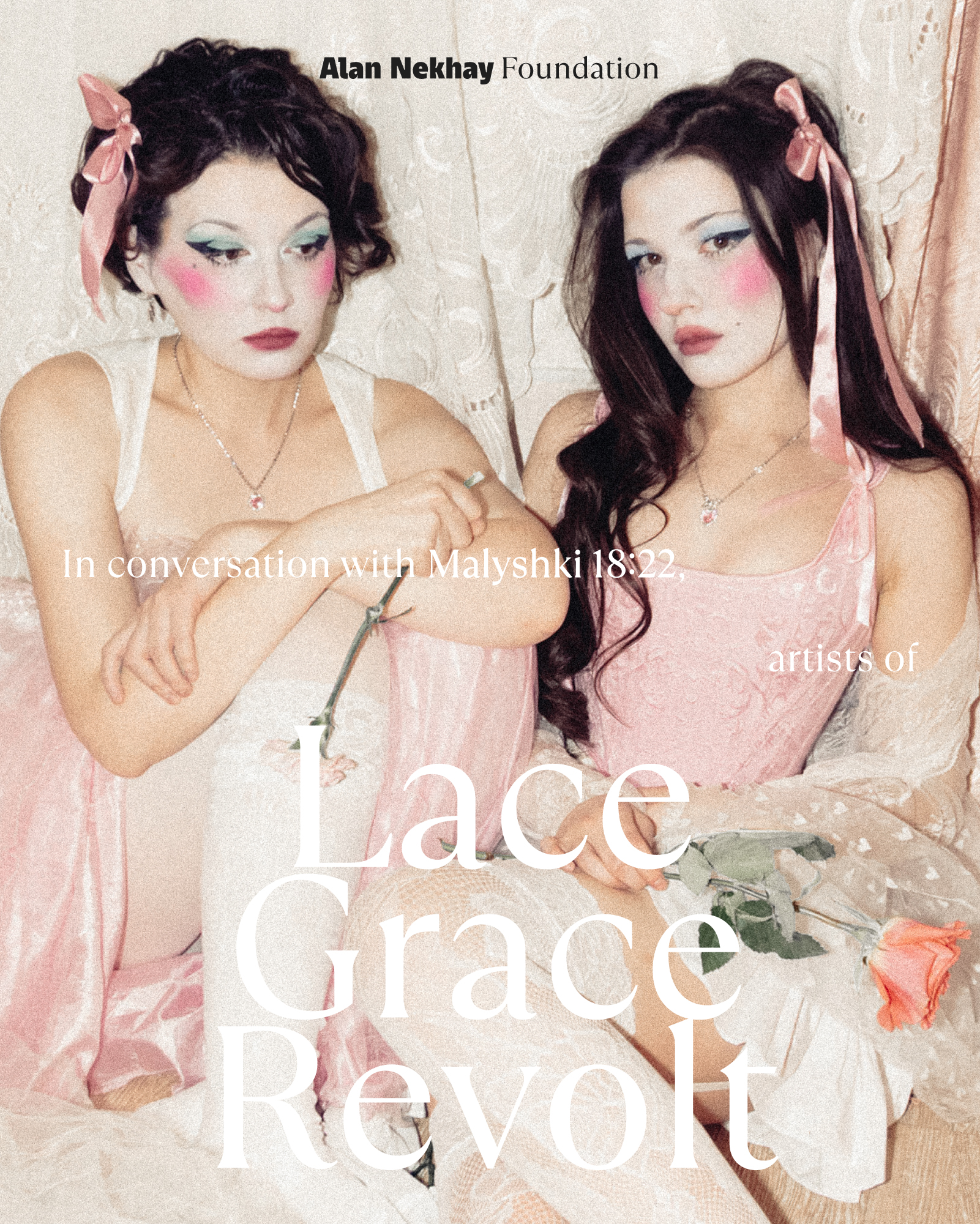
Alan: Why is femininity such an important topic for you and your practice?
Malyshki 18:22: We always draw from real life and our personal experience - and ours is shaped by being women, being from Siberia, and being sisters. Looking at the world through that lens makes it both meaningful and powerful to talk about a lot of issues in society.
Malyshki 18:22: We always draw from real life and our personal experience - and ours is shaped by being women, being from Siberia, and being sisters. Looking at the world through that lens makes it both meaningful and powerful to talk about a lot of issues in society.
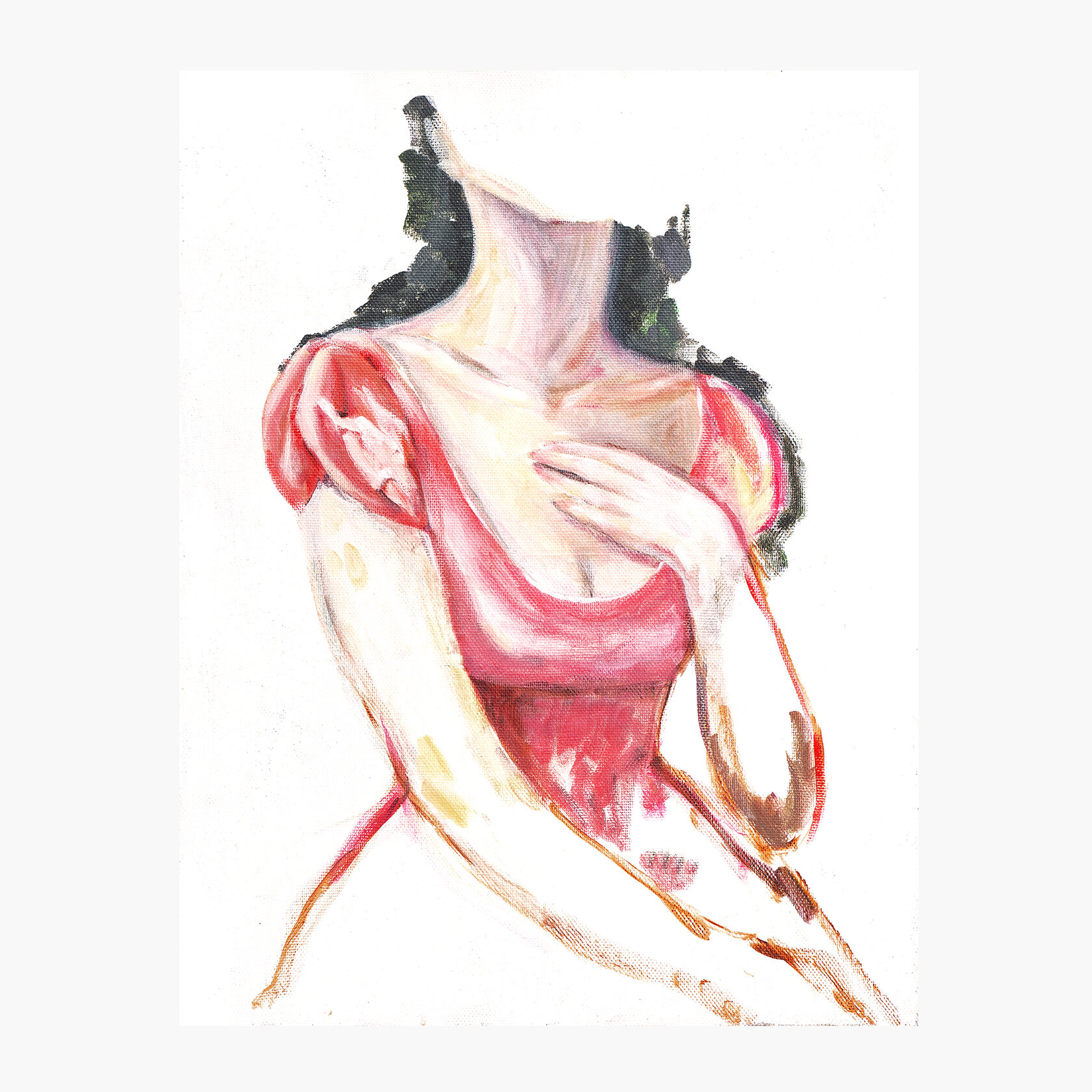
Alan: What kind of meanings does the color pink carry for you?
Malyshki 18:22: We see pink through all the different contexts it exists in today. We love combining contrasts! Pink can be childish, commercial, loud, feminine, feminist, even controversial - all at once. For us, it's also the color of diluted blood, the color of a wound. And if you look at it historically, pink was actually considered a masculine color in Europe before WWIl.
Malyshki 18:22: We see pink through all the different contexts it exists in today. We love combining contrasts! Pink can be childish, commercial, loud, feminine, feminist, even controversial - all at once. For us, it's also the color of diluted blood, the color of a wound. And if you look at it historically, pink was actually considered a masculine color in Europe before WWIl.
Alan: What are "men laughing" about, and what are "girls crying" over?
Malyshki 18:22: "Men laugh, girls cry" is a contrast-heavy phrase from our Garage Archive project dedicated to the Blue Noses. It reflects a kind of father-daughter problem - where we, as daughters, find ourselves in relation to our Siberian artist fathers. It's about a lack of freedom, a position of dependence. At the same time, it speaks to the relationship between Moscow and Siberia - where our homeland is seen as dependent, not self-sufficient.
Malyshki 18:22: "Men laugh, girls cry" is a contrast-heavy phrase from our Garage Archive project dedicated to the Blue Noses. It reflects a kind of father-daughter problem - where we, as daughters, find ourselves in relation to our Siberian artist fathers. It's about a lack of freedom, a position of dependence. At the same time, it speaks to the relationship between Moscow and Siberia - where our homeland is seen as dependent, not self-sufficient.
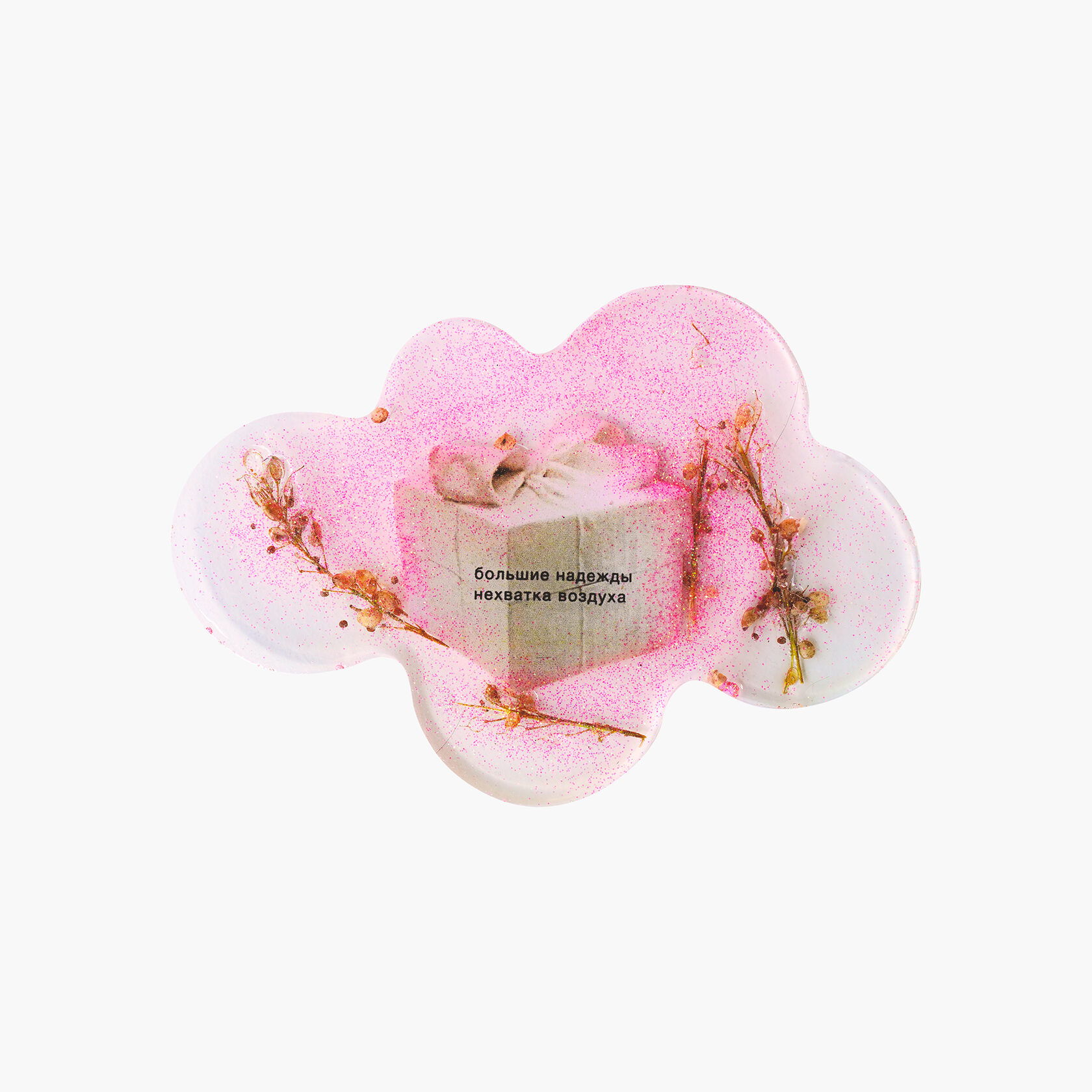
Alan: In your opinion, what conceptually distinguishes women's art from men's?
Malyshki 18:22: Women's art stands apart because the rules of the art world - and the world in general - were made by men. Women artists rethink and rewrite those rules. The power lies not in adapting to them, but in creating a shared playing field - one that's more interesting, inclusive, and comfortable for everyone.
Malyshki 18:22: Women's art stands apart because the rules of the art world - and the world in general - were made by men. Women artists rethink and rewrite those rules. The power lies not in adapting to them, but in creating a shared playing field - one that's more interesting, inclusive, and comfortable for everyone.
Alan: How is feminine strength defined?
Malyshki 18:22: Feminine strength is conscious, lived experience - a woman's journey. It's about finding your own way toward freedom, self-expression, and the power to choose.
Malyshki 18:22: Feminine strength is conscious, lived experience - a woman's journey. It's about finding your own way toward freedom, self-expression, and the power to choose.